

Key Takeaways
-
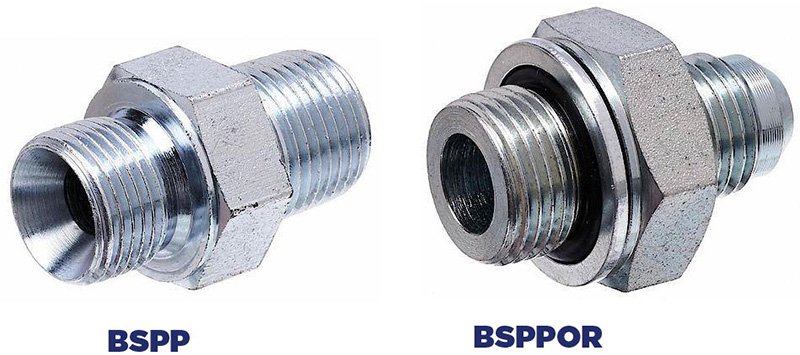
British Standard Pipe Parallel (BSPP) and British Standard Pipe Parallel with O-Ring (BSPPOR) fittings use the same thread form but seal in completely different ways.
-
BSPP seals on a cone seat: the tapered nose of the female swivel seats against the cone of the male fitting to create the seal.
-
BSPPOR seals on a flat face: a machined flat surface (spotface) on the port creates the sealing surface, using an O-ring, bonded seal, or metal-to-metal contact.
-
A BSPP male thread is similar in appearance to a National Pipe Straight Mechanical (NPSM) male, but the two are not interchangeable. Thread pitches differ in most sizes.
-
Misidentifying BSPP and BSPPOR at ordering time results in fittings that do not seal correctly, even though they may thread together.
British Standard Pipe fittings are among the most widely used foreign thread types in the world, and they appear frequently on imported equipment in North American shops. The confusion point is not the threads themselves but the sealing method. British Standard Pipe Parallel (BSPP) and British Standard Pipe Parallel with O-Ring (BSPPOR) share the same thread form but seal in fundamentally different ways. Ordering the wrong fitting type produces a connection that threads together but does not seal.
How Does British Standard Pipe Parallel (BSPP) Create a Seal?
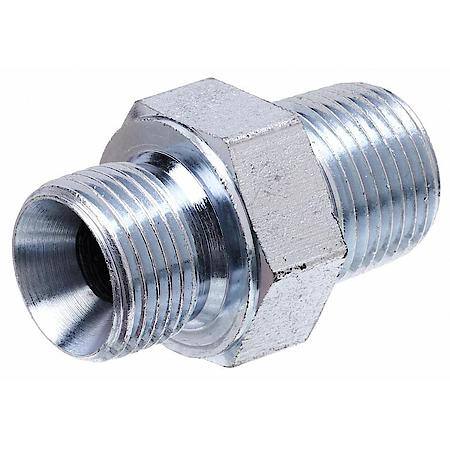
The BSPP parallel male connector is similar in appearance to the American National Pipe Straight Mechanical (NPSM) male, but the two are not interchangeable. Thread pitch differs between BSPP and NPSM in most sizes.
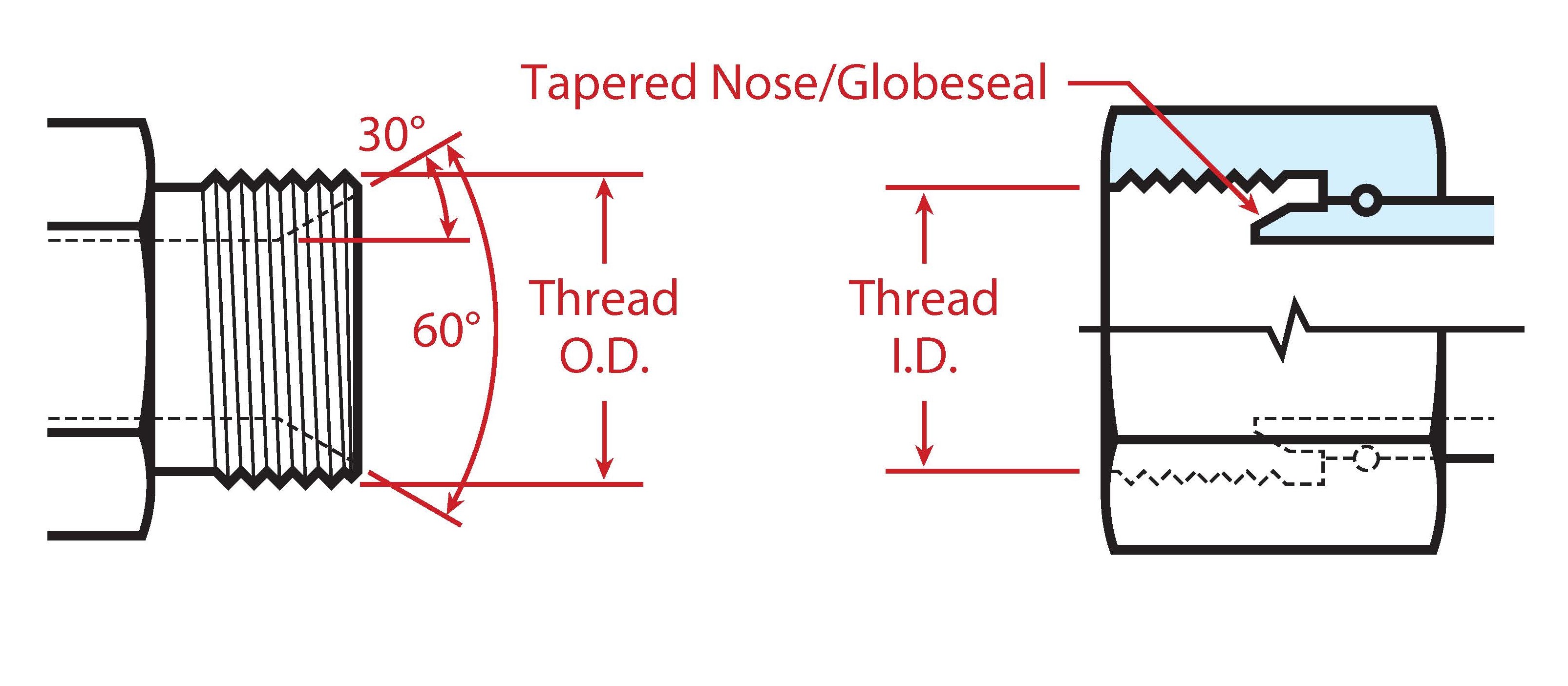
The BSPP female swivel fitting has a tapered nose. That tapered nose seats against the cone seat of the male fitting to create the seal. The sealing action occurs at the metal-to-metal contact between the tapered nose and the cone, not at the threads.
What Is a Flat Face Port with BSPP Threads (BSPPOR)?
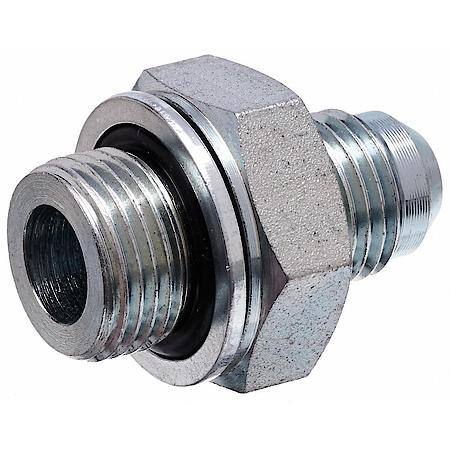
The BSPPOR port is governed by International Organization for Standardization (ISO) 1179-1, Deutsches Institut fur Normung (DIN) 3852 Part 2. Like BSPP, it uses a parallel thread. Unlike BSPP, it does not rely on a cone seat for sealing.
In the BSPPOR design, the female port has a machined flat surface called a spotface. The male fitting seals against that flat surface using a sealing element: an O-ring, a bonded seal, or a metal-to-metal seal. The thread holds the connection; the seal element on the flat face stops the fluid.
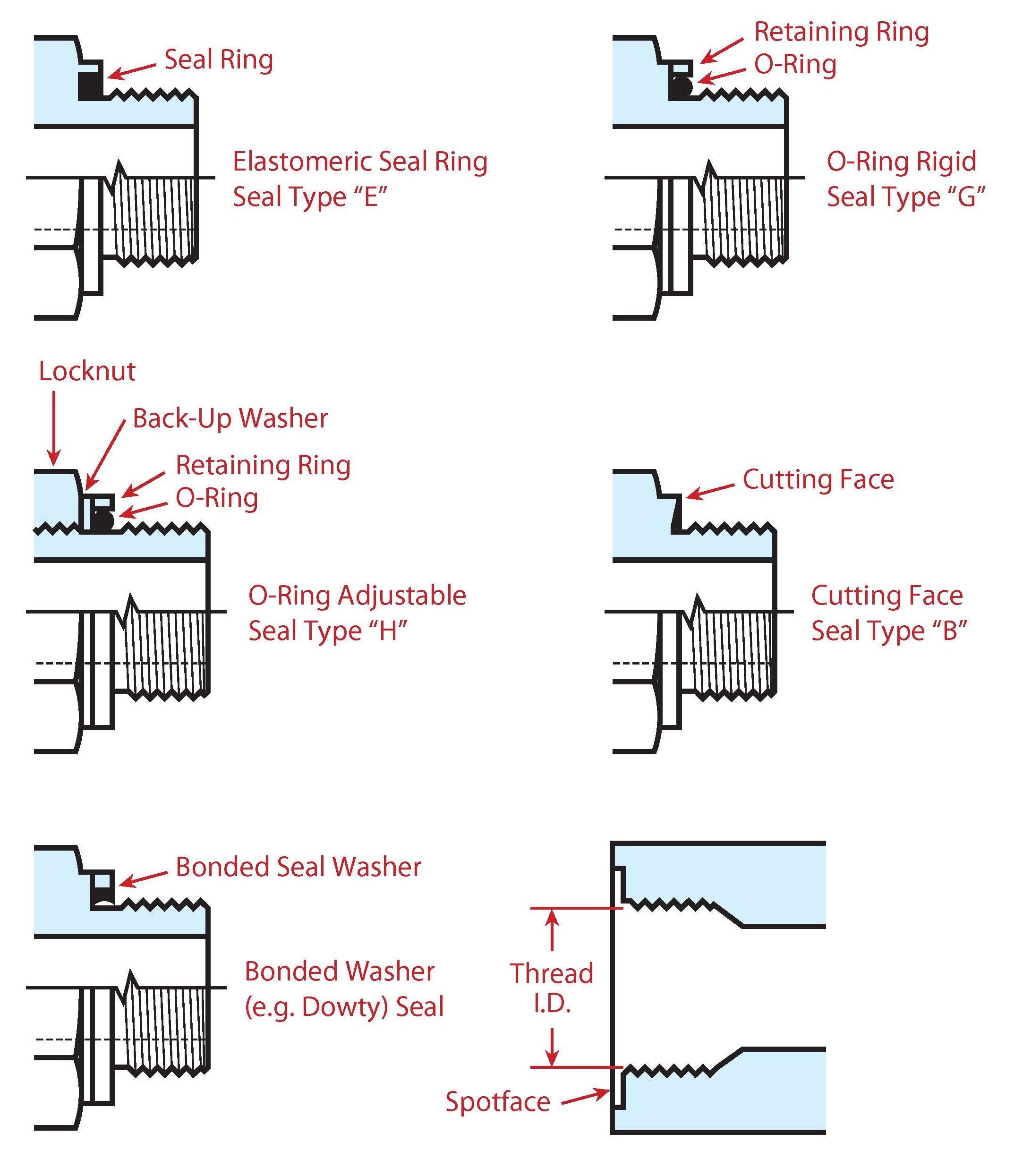
For detailed British thread identification guidance, see the Adaptall British thread identification guide.
Metric hydraulic adapters for British thread applications:
Need Help?
Contact us today or call us at 800-669-9650 for help identifying and sourcing British hydraulic thread fittings.
We have 11 locations across the Southeast and Midwest, including Knoxville, TN; Marietta, GA; Princeton, WV; Orlando, FL; Charlotte, NC; Little Rock, AR; Benton, IL; Madisonville, KY; Fort Worth, TX; Calvert City, KY; and Birmingham, AL.
Frequently Asked Questions
Both use a parallel British thread, but the sealing method is different. BSPP seals through a tapered female nose seating on the male cone seat. BSPPOR seals through a sealing element (O-ring, bonded seal, or metal-to-metal contact) acting on a machined flat spotface surface in the port. The threads are physically compatible, but the fittings are not interchangeable for sealing purposes.
The thread form is the same, so a BSPP male can thread into a BSPPOR port and vice versa. However, installing a BSPP fitting into a BSPPOR port will not produce a reliable seal because the BSPPOR port has no cone seat for the tapered nose to contact. Always match fitting type to port type.
The BSPP male has a parallel thread and a cone seat at the nose. The female swivel has a tapered nose that contacts that cone. Compare thread pitch against a gauge and look for the cone profile at the nose of the fitting. When in doubt, use a thread identification kit that includes BSP gauges.
BSPPOR flat face port fittings are governed by ISO 1179-1 and DIN 3852 Part 2. These standards specify thread form, port dimensions, and sealing face geometry. Equipment manufactured to these standards will have ports that accept BSPPOR fittings with the correct sealing element.
BSPP and NPSM look similar but are not interchangeable in most sizes due to differences in thread pitch. Even where a BSPP male appears to engage an NPSM female thread, the fit is not correct and the connection will not seal reliably. Always verify thread type with a gauge before assembling.
Correctly identifying BSPP and BSPPOR fittings before ordering prevents seal failures and rework. When servicing equipment with British thread ports, use a thread identification kit that includes BSP gauges and verify the sealing method required before selecting a fitting.


