

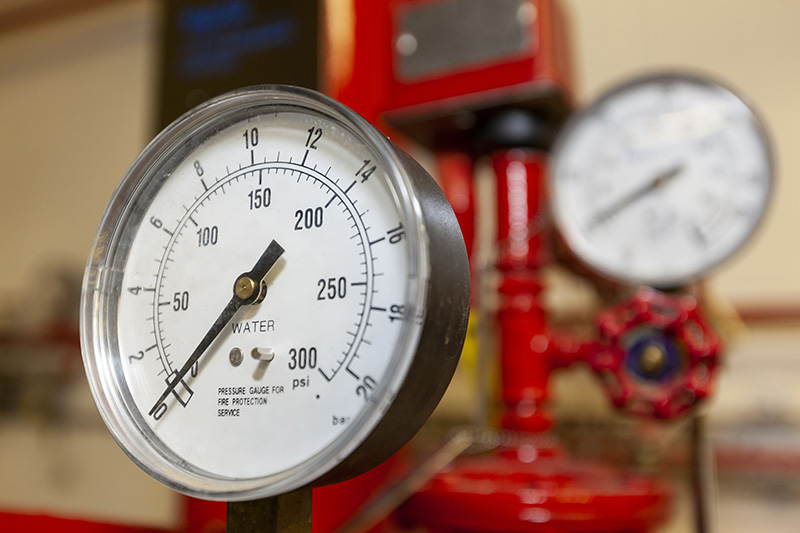
Key Takeaways
-
Dry gauges are best for stable environments with little vibration or moisture; liquid-filled gauges are better for high-vibration or high-pulsation applications.
-
Liquid-filled gauges are typically filled with glycerine, which dampens vibration, lubricates internal parts, and prevents corrosion.
-
Dry gauges are susceptible to moisture condensation inside the dial, which can obscure readings and freeze in cold temperatures.
-
Liquid-filled gauges provide greater accuracy and longer service life in demanding environments, offsetting their higher upfront cost.
-
Royal Brass and Hose stocks dry and liquid-filled gauges from 30 lb to 5,000 lb in 1-1/2" to 2-1/2" sizes.
What Are the Two Main Types of Pressure Gauges?
Dry gauges are mainly used for industrial machines including air compressors. Ideal for environments where mechanical vibration is not a concern and where there is little to no moisture. Liquid-filled gauges can absorb vibration and pressure spikes, which will reduce the possibility of poor performance or failure.
Dry pressure gauges are the workhorse of the industrial and commercial parts world. Look at most air compressors. Many industrial machines and even some of the fancier bicycle pumps will have a dry gauge. Dry gauges do have some drawbacks, though. The dial can become obscured by moisture inside the gauge. If the temperature drops low enough, the moisture can convert to ice, causing a total failure of the device.

How Do Liquid-Filled Pressure Gauges Perform Differently?
Liquid-filled pressure gauges do the same job but with greater precision. Liquid-filled pressure gauges are available in pressure ranges equal to or higher than their dry counterparts. Their casings are filled with fluid, usually glycerine, although silicone or other liquids are sometimes used. The liquid coats the internal parts and is visible on the gauge's face. Having the liquid inside works to dampen the effect of pulsation and pressure spikes, which is another advantage over choosing a dry gauge. This means the pressure gauges are less likely to give inaccurate readings due to wear and tear that mechanical vibration and pulsation tends to cause. The liquid in these pressure gauges does double duty when it comes to fighting those effects. Not only does it help mitigate the effect of vibration, liquid also lubricates the gauge's moving parts, reducing everyday friction. The filling also has the benefit of preventing internal corrosion, which adds up to a longer service life and lower replacement costs for liquid-filled pressure gauges over dry pressure gauges.
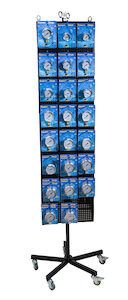
An assortment of 1-1/2" to 2-1/2" liquid-filled and dry gauges are available. It includes our most popular gauges from 30 lb to 5,000 lb.
Browse our full pressure gauge selection
Shop Our Gauge Products
Find the right gauge for your application:
Need Help?
Trying to figure out which gauge you need? Contact your Royal Brass and Hose local sales representative or call 800-669-9650 to speak with a member of our customer service team. Our locations include Knoxville, TN; Marietta, GA; Orlando, FL; Charlotte, NC; Little Rock, AR; Fort Worth, TX; Benton, IL; Madisonville, KY; Princeton, WV; Birmingham, AL; and Calvert City, KY.
Frequently Asked Questions
A dry gauge has an air-filled casing and is best for stable, low-vibration environments. A liquid-filled gauge has a glycerine-filled casing that dampens vibration and pressure spikes, making it more accurate and durable in demanding industrial applications.
Liquid-filled gauges are most commonly filled with glycerine. Silicone or other liquids may also be used depending on the application's temperature range and fluid compatibility requirements.
Yes. Moisture can accumulate inside a dry gauge. If temperatures drop low enough, that moisture can freeze, causing total gauge failure. In cold or outdoor environments, a liquid-filled gauge is generally a more reliable choice.
Yes. Liquid-filled gauges are available in pressure ranges equal to or higher than their dry counterparts. The fill liquid does not limit the pressure rating of the gauge.
Royal Brass and Hose stocks a wide selection of dry and liquid-filled pressure gauges. Browse our gauge catalog, or contact our team for help selecting the right gauge for your system.


