

Key Takeaways
-
Agricultural PTO (Power Take-Off) drivelines can be identified by four key characteristics: equipment type, component structure, North American versus metric design, and series measurement.
-
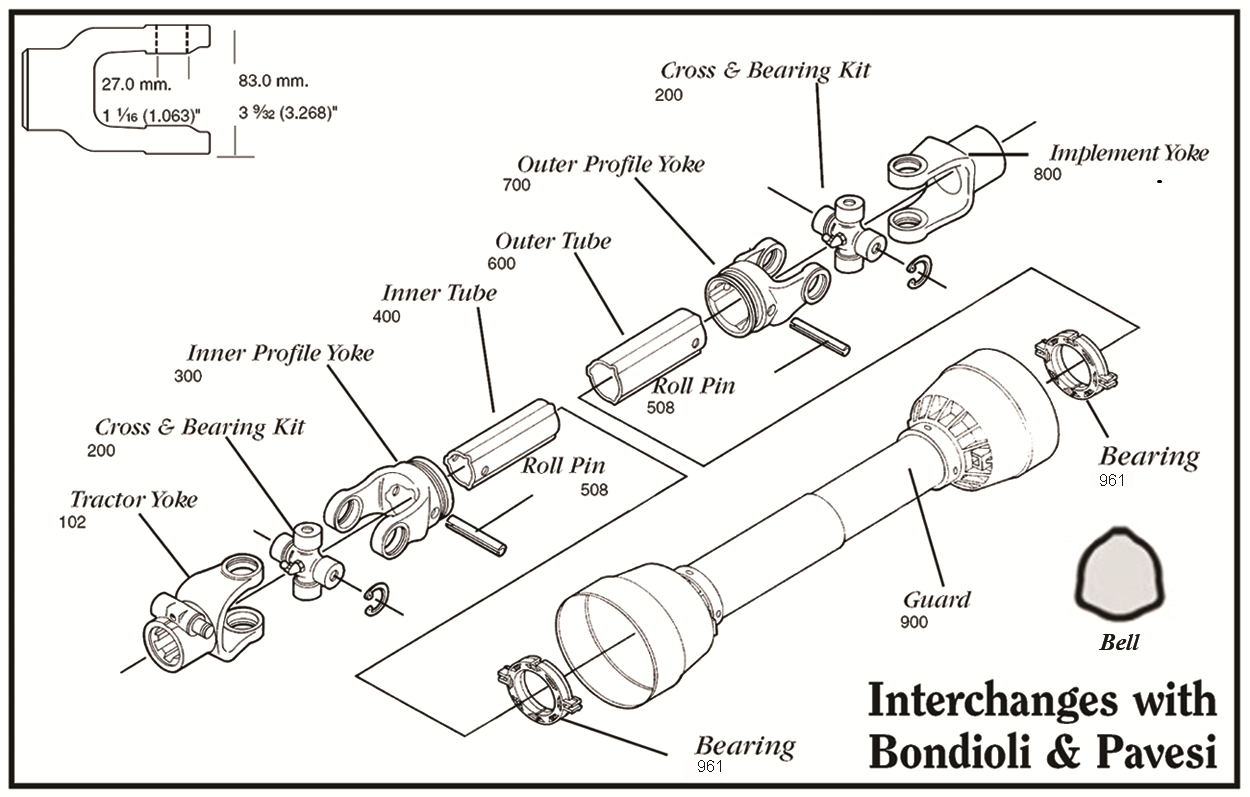
The eight main components (tractor yoke, cross and bearing kit, shaft yoke, shaft, tube, tube yoke, implement yoke, and guard) work together to transfer power from tractor to implement.
-
North American drivelines use square, rectangular, hex, or splined tubing; metric drivelines feature lemon, star, or bell-shaped profiles depending on German or Italian design.
-
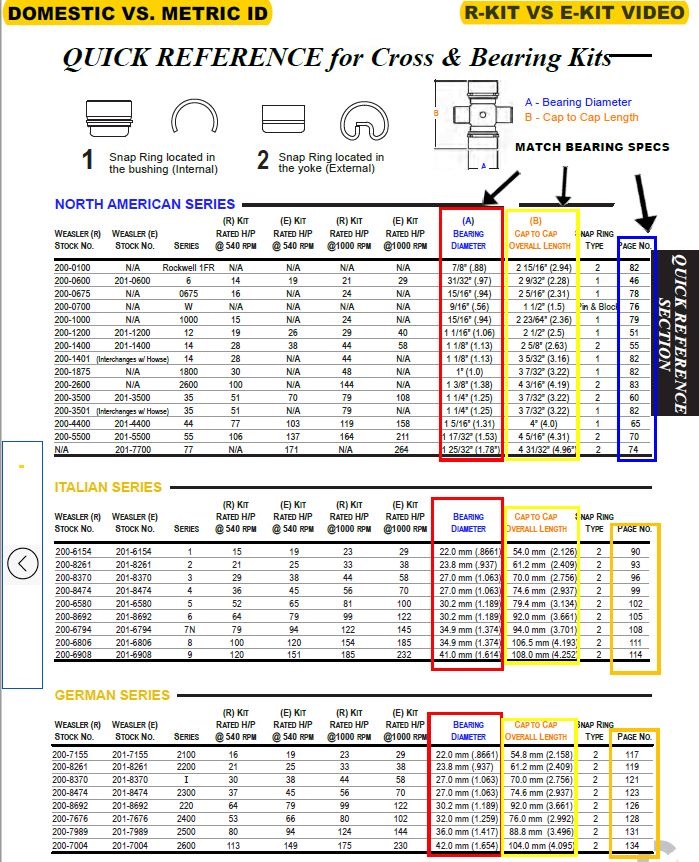
Taking precise measurements of the U-joint caps and cross and bearing kit dimensions allows you to match the exact series required for replacement or repair.
Your tractor is down. A PTO driveline has failed, and you need a replacement, or just a component, to get back to work. The wrong part is wasted time and money. Knowing how to identify your specific driveline in minutes separates a quick fix from hours of hassle. This guide walks you through four straightforward identification steps.
What equipment will the driveline be used for?
If you know which piece of equipment needs the driveline and want to replace the entire assembly, identification is straightforward. Select the equipment category and note the tube shape (square, rectangular, hex, or splined for North American; lemon, star, or bell for metric). Measure the driveline length. These two details point directly to your replacement.
If you need to replace or repair an individual driveline component instead, the next section breaks down each part.
What are the individual driveline components?
Understanding each part of the assembly helps you order the right component for repair:
1. Tractor Yoke
The connection point on the tractor where the driveline attaches. Two types exist: Spring-Lock, which uses a spring-loaded collar to attach and release; and Quick Disconnect, which uses a push-pin mechanism. The collar notches on the yoke identify which type you have.
2. Cross and Bearing Kit
The U-joint that connects the yokes. It has either an internal snap ring in the bushing or an external snap ring in the yoke ears. Knowing the snap ring location and measuring the u-joint caps are essential for finding the correct series.
3. Shaft Yoke
Connects the tractor yoke to the driveline shaft via a cross and bearing kit.
4. Shaft
The metal rod running through the center of the driveline, providing its length and connecting the yoke attachments.
5. Tube
The metal cylinder surrounding the shaft, adding reinforcement and protection.
6. Tube Yoke
Attached to the tube end, this yoke connects to the implement using a second cross and bearing kit.
7. Implement Yoke
The connection point to the machine or device being operated by the tractor.
8. Guard
Hard plastic covering around the driveline to prevent damage during operation.
Is the driveline North American or metric?
The simplest way to identify domestic versus metric is to look at the tubing and shaft profile. A North American (domestic) driveline has square, rectangular, hex, or splined tubing and shafting. A metric driveline features bell, lemon, or star-shaped profiles. Two metric styles exist: German (Walterscheid brand) with lemon and star profiles, and Italian (Bondioli and Pavesi) with bell-shaped design. Identifying the profile tells you not only whether your driveline is metric, but also which manufacturer's parts you need.


What series is the driveline?
Series is determined by measuring the cross and bearing kit at the tractor end of the driveline. You'll need calipers and a small ruler or measuring tape.
First measurement: Using calipers, measure the outside diameter of the U-joint caps (the same as the inside hole diameter of the yoke ears).

Second measurement: Measure the U-joint end-to-end in both directions (across the ears and along the length).

Match these measurements against a cross and bearing identification chart. Once you have your series, you can identify and order any remaining component or replace the entire driveline with confidence.
Need to replace a driveline or component part?
Identifying your agricultural PTO driveline requires just four steps and a few minutes of careful measurement. Once you know the equipment type, component names, North American versus metric designation, and series, finding the exact replacement or repair part is straightforward. Save time and avoid costly mistakes by getting it right the first time.
Contact us today or call us at 800-669-9650 if you need help identifying your PTO driveline or locating replacement parts.
We have 11 locations across the Southeast and Midwest, including Knoxville, TN; Marietta, GA; Orlando, FL; Charlotte, NC; Little Rock, AR; Fort Worth, TX; Benton, IL; Madisonville, KY; Princeton, WV; Birmingham, AL; and Calvert City, KY.
Frequently Asked Questions
Look at the collar on the yoke. Spring-Lock yokes have notches on the collar and use a spring-loaded mechanism to grip the driveline. Quick Disconnect yokes have holes on opposite sides of the collar where a push-pin slides through to lock and release the connection. Quick Disconnect is faster for frequently swapped implements.
Internal snap rings sit inside the bushing of the cross and bearing kit. External snap rings are located in the ears of the yoke itself. Both serve the same purpose, keeping the u-joint bearings in place, but you need the correct type for your yoke. When ordering replacement parts, confirm which style your driveline uses.
No. Metric and North American drivelines have different spline patterns, shaft profiles, and component dimensions. Mismatched parts will not fit properly and risk driveline failure during operation. Always use the correct type for your equipment.
Yes, but make sure the tractor is off and the implement is secured. Measure from the inside of the tractor yoke to the inside of the implement yoke. If you're unsure about taking the measurement while installed, remove the driveline first and measure on a workbench, this is safer and more accurate.


