

Key Takeaways
-
Tube bending uses mechanical forces to shape metal tubing against dies and rollers, working with steel, stainless steel, aluminum, brass, copper, and titanium
-
Original Equipment Manufacturer (OEM) applications require custom tube configurations that off-the-shelf assemblies cannot meet
-
Computer Numerical Control (CNC) bending technology delivers exact specifications, reduces errors, and ensures consistency across all production units
-
Custom tube assembly from Royal Brass and Hose provides optimized flow, compact design, and cost savings through reduced rework and material waste
Tube bending and assembly play a critical role in industries from automotive to aerospace. Whether the need is intricate piping systems or simple tube configurations, understanding the tube bending process is essential for selecting the right fabrication partner.
What Is Tube Bending?
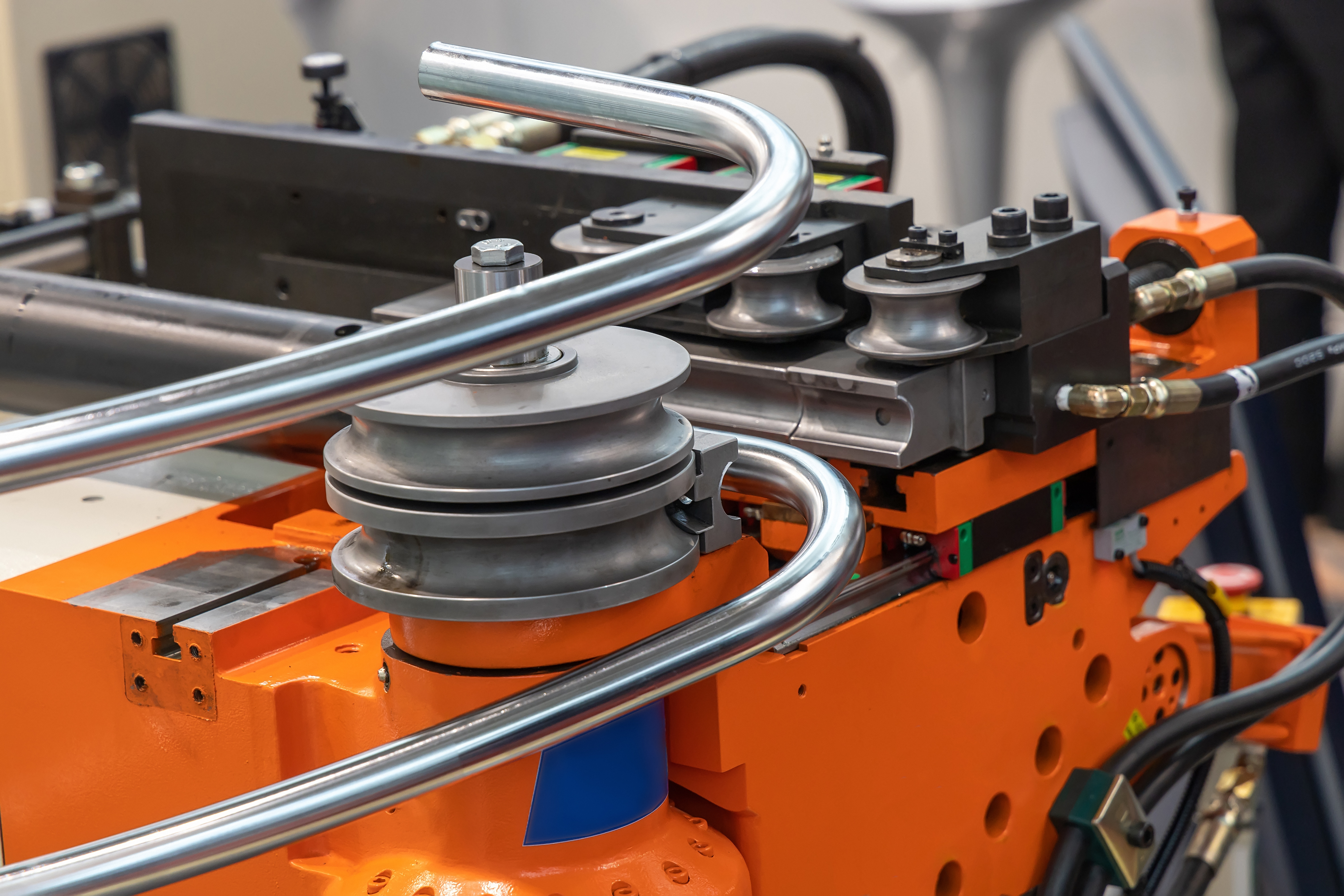
Tube bending consists of a series of manufacturing processes that alter the shape of a pipe or tube to create the desired geometry or features that meet specific requirements. In the process, tube stock is loaded into a bending machine that uses mechanical forces to push the tube against dies and rollers, causing the tube to conform to a shape. Tube bending can be performed on a wide selection of metal tubing and pipe materials, including steel, stainless steel, aluminum, brass, copper, and titanium.
The following example shows how custom tube bending is applied in a real-world automotive Original Equipment Manufacturer (OEM) scenario.
How Is Custom Tube Assembly Used in the Automotive Industry?
An automotive OEM needs to design a new fuel delivery system for their latest line of high-performance vehicles. The system requires complex tube configurations to ensure optimal fuel flow, minimize emissions, and fit within the compact engine compartments of modern cars. Off-the-shelf tube assemblies are inadequate due to the specific geometric and performance requirements of the project.
To meet these challenges, the OEM partners with a vendor or distributor who specializes in tube bending for industrial applications.
A typical project follows these four phases:
1. Design and Engineering Collaboration
-
Collaborative Design Process: The OEM’s engineers work closely with the tube bending service provider to develop a custom design for the fuel delivery system. This involves creating detailed Computer-Aided Design (CAD) models and simulations to ensure optimal fuel flow and system performance.
-
Prototyping and Testing: Initial prototypes are produced using advanced CNC bending machines. These prototypes undergo rigorous testing for flow dynamics, pressure resistance, and durability, allowing for iterative improvements before full-scale production.
2. Customization and Flexibility
-
Complex Geometries: The fuel delivery system requires tubes with intricate bends and precise angles to navigate the limited space within the engine compartment. Bending machines enable the creation of these complex shapes with high precision, ensuring a perfect fit.
-
Material Selection: Given the need for high durability and resistance to corrosion, materials such as stainless steel and aluminum may be chosen. The service provider’s expertise in bending these materials ensures that the tubes maintain their integrity and performance characteristics.
3. Precision and Efficiency
-
Exact Specifications: CNC bending technology allows each tube to meet exact specifications, reducing the risk of errors and ensuring consistency across all units.
-
Streamlined Production: The automated bending process significantly reduces production time. This efficiency enables the OEM to meet tight production schedules and quickly adapt to changes in design requirements.
4. Quality Assurance and Reliability
-
Stringent Quality Control: Each custom tube assembly undergoes comprehensive quality control and dimensional checks, ensuring that every component meets the stringent quality standards required for high-performance automotive applications.
-
Regulatory Compliance: The custom tube assemblies are designed to comply with industry regulations and environmental standards, ensuring that the final product is market ready.
Why Do OEMs Choose Royal Brass and Hose for Custom Tube Assembly?
With Royal Brass and Hose, OEMs can develop reliable tubing systems tailored to their specific requirements. The benefits include:
-
Optimized Flow: Custom tube design ensures efficient delivery of fluids or gases.
-
Compact and Efficient Design: Precise bending and assembly allows the system to fit seamlessly within tight application spaces, meeting space constraints without compromising functionality.
-
Cost Savings: Royal Brass and Hose processes orders large and small quickly. High-quality output minimizes rework and material waste, resulting in significant cost savings. The team helps determine the right material and solution for each application.
The need for precise, efficient, and reliable components in a tube or pipe assembly is critical for production and equipment use. By partnering with a specialized tube bending provider like Royal Brass and Hose, OEMs can achieve tailored solutions that enhance product performance, meet specific design criteria, and maintain a competitive edge.
Looking for Tube Assembling Services?
Proper tube assembly is crucial for ensuring the integrity and performance of tubing systems. Skilled professionals ensure that each component is perfectly aligned, securely connected, and meets industry standards.
Contact us today or call us at 800-669-9650 to speak with a member of the customer service team about your tube bending needs.
We have 11 locations across the Southeast and Midwest, including Knoxville, TN; Marietta, GA; Orlando, FL; Charlotte, NC; Little Rock, AR; Fort Worth, TX; Benton, IL; Madisonville, KY; Princeton, WV; Birmingham, AL; and Calvert City, KY.
Frequently Asked Questions
Tube bending works with a wide range of metal tubing and pipe materials, including steel, stainless steel, aluminum, brass, copper, and titanium. Material selection depends on the application’s requirements for durability, corrosion resistance, and temperature tolerance.
CNC (Computer Numerical Control) tube bending uses automated machines programmed to produce exact tube specifications. This technology reduces errors, ensures consistency across production runs, and enables complex geometries that manual bending cannot achieve.
Yes. Royal Brass and Hose processes custom tube orders of all sizes quickly. The combination of CNC precision and experienced staff minimizes rework and material waste regardless of order volume.


